Is there a Prophet in the house?
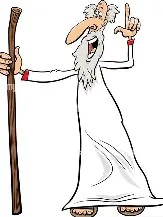
Starting in High School and continuing over the course of my adult life I have attended more than a few Job Fair/Career Expo events. Sometimes as a job seeker and sometimes representing an entity looking to hire. Most have been informative, occasionally discovering an occupation that I didn’t even know existed. But I have to say that in all my experiences I have never seen a booth set up at a job fair offering information about becoming a Prophet.
I no longer buy that definition. Most of the Biblical prophets spent their time speaking out (with loud voices) against injustice and the exploitation of those who had no power. To use a common phrase, they spoke truth to power. They exposed evil that the powerful tried to hide. Someone said a prophet’s job is not fortune telling, but rather forth-telling. In other words, telling the truth about current events, even when it would likely draw fire from the powerful.
So, I decided to ask my computer what a good job description would be for a prophet. In case you might be interested in becoming one, here is a sampling of some of the job duties AI came up with for a prophet:
- Ethical and Social Reformer: Denouncing moral, social, and political corruption, and acting as a watchdog against injustice, idolatry, and empty religious rituals.
- Watchman/Warner: Warning the community of impending judgment or the consequences of disobedience and providing insight into the future only to guide the present.
- Intercessor: Standing in the gap between God and the people, often praying for mercy on behalf of the community.
While most discussions seem to focus on religious prophets, others talk about secular prophets. Again, from AI, my understanding is that secular prophets are influential thinkers, activists, and others who, without referencing religious authority, foresee critical future trajectories and urge societal change regarding, for example, environmental, crises, technology, and justice. I think of poets, storytellers, philosophers, singer/song writers, and teachers who challenge us with their perspective of life.
But you can’t talk about prophets without also mentioning the existence of what are called false prophets. Here’s part of how AI defines a false prophet:
“Often described as wolves in sheep’s clothing, they are characterized by leading followers astray through manipulation, false teachings, greed, and a lack of accountability.”
My hunch is that authentic prophets and false prophets have been around as long as we humans have been able to express ourselves. And they certainly exist today. We hear them everywhere, selling their particular brand of the truth, sharing their own vision of the future. Our job is to listen critically to determine which voices hold truth and align with our own values.
Here’s what I ask myself when deciding which prophets to listen to:
Do they sound like prophets who are using manipulation, greed and lack of accountability to sell their vision? Or do they sound like voices who are denouncing moral, social and political corruption and speaking up for those who have little or no power? Both voices are battling for our allegiance.
May we have ears to hear, and courage to speak.
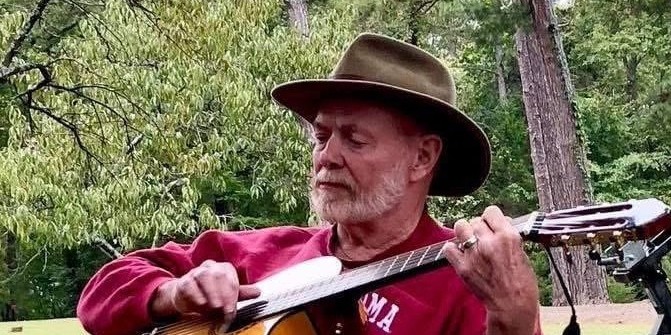
Ken Bailey is pastor of a Presbyterian church in small town Oklahoma. Most of his professional life was spent as a Licensed Marriage and Family Therapist, working in a variety of clinical settings. In his role as therapist and minister, he has felt fortunate to walk with clients and parishioners through the seasons and struggles of life. More recently he has enjoyed being a part of the Exploracast team, connecting with folks in a completely different medium.
Married for 55 years to his high school sweetheart, he is the father of two adult children, and three grandchildren. He enjoys listening to and playing music, fly fishing for mountain trout, writing and taking naps.

I've Always Loved the Fourth of July